
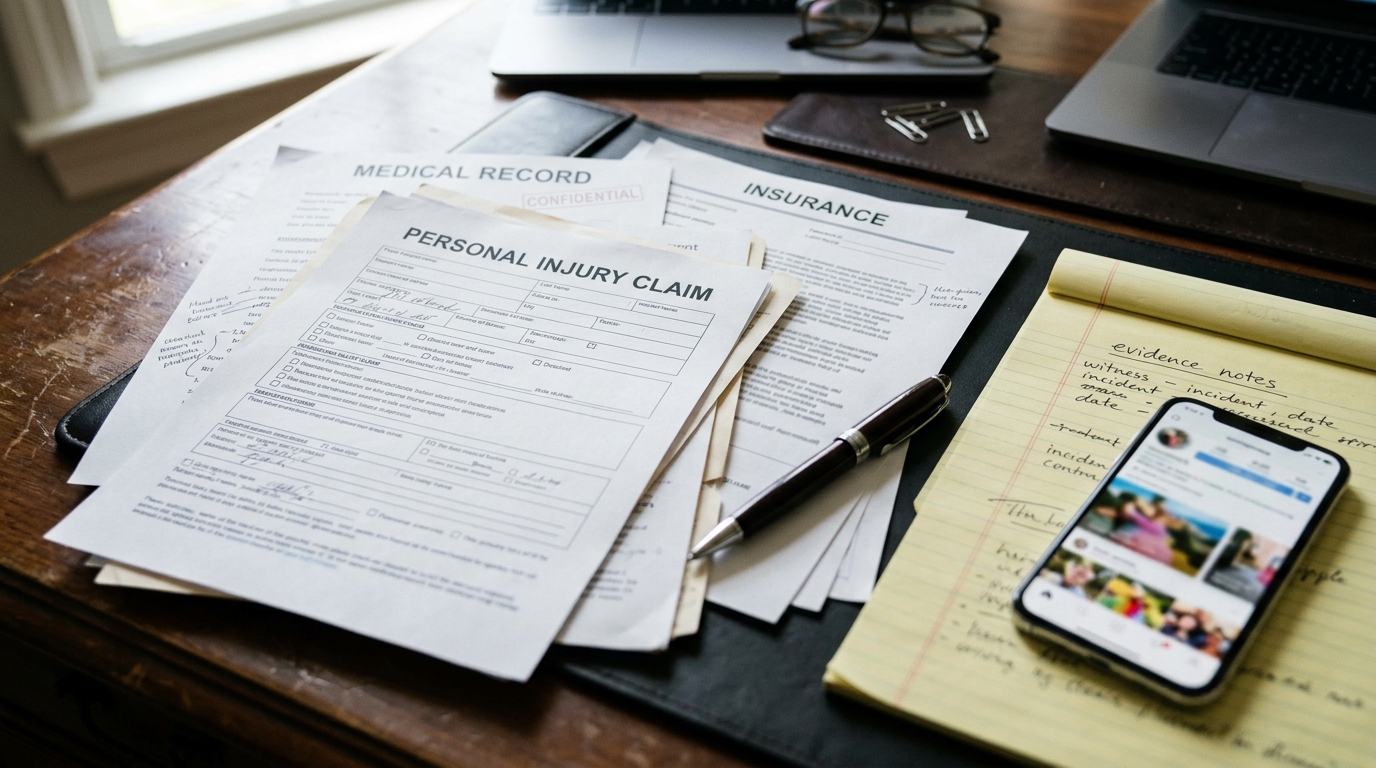
Social media can affect a New York personal injury claim because posts, photos, videos, comments, location tags, activity updates, and private account content may become relevant when injuries, daily limitations, emotional distress, lost income, or credibility are disputed. People reviewing accident-related evidence may use a personal injury lawyer Long Island resource to understand how online activity, medical records, insurance issues, and damages are generally evaluated.
Quick Answer
Social media can affect a New York personal injury claim when online posts appear inconsistent with injury allegations, medical restrictions, work limitations, emotional distress, or daily activity claims. Privacy settings do not automatically protect relevant social media from discovery in litigation. At the same time, filing a personal injury claim does not automatically make an entire social media account discoverable. Courts generally focus on relevance, case-specific facts, privacy concerns, and whether the request is properly tailored.
Key Takeaways
- Social media posts, photos, videos, comments, tags, and location check-ins may be reviewed in relation to injury claims.
- In Forman v. Henkin, the New York Court of Appeals rejected a special heightened threshold for social media discovery and held that courts should use ordinary discovery principles focused on relevance and proper tailoring. New York Courts
- Privacy settings do not automatically block disclosure if the material is relevant, but courts have also rejected the idea that an entire social media account is automatically discoverable just because a personal injury claim was filed. New York Courts
- New York CPLR § 3101 provides for full disclosure of matter material and necessary in the prosecution or defense of an action. NYSenate.gov
- New York CPLR § 3120 addresses discovery and production of documents and things for inspection, testing, copying, or photographing. NYSenate.gov
- Deleting or altering posts after a claim begins can create problems if the content should have been preserved.
- Social media should be handled carefully, honestly, and consistently with medical records, treatment restrictions, and claim statements.
Why Social Media Matters in Personal Injury Claims
A personal injury claim often involves more than medical bills. It may also involve pain, emotional distress, activity limitations, lost wages, reduced quality of life, and long-term restrictions. Social media can become relevant when it shows what a person was doing, saying, posting, attending, sharing, or being tagged in after the accident.
Social media may be reviewed for:
- Physical activity
- Travel
- Sports or exercise
- Work activity
- Social events
- Photos with visible movement
- Videos showing activity level
- Comments about pain or recovery
- Posts about the accident
- Emotional distress claims
- Location check-ins
- Tagged photos from friends
- Statements about settlement or insurance
- Inconsistent comments about how the accident happened
A social media post does not always tell the full story. A person may look fine in one photo but still have pain, medication use, limitations, or symptoms afterward. However, insurers and defense attorneys may use posts to challenge the claim.
Social Media Is Evidence
Social media can be evidence because it may document a person’s activities, statements, condition, relationships, location, or lifestyle. The evidence may come from public posts, private posts, comments, photos, videos, messages, account data, tags, metadata, or third-party screenshots.
Social media evidence may include:
- Facebook posts
- Instagram photos
- TikTok videos
- YouTube videos
- X posts
- LinkedIn activity
- Snapchat screenshots
- Threads posts
- Public comments
- Private messages
- Story highlights
- Tagged photos
- Location check-ins
- Fitness posts
- Event photos
- Travel posts
- Work-related updates
A broader guide to evidence for personal injury claims can help explain why digital evidence, medical records, witness information, and claim documents often need to support the same timeline.
Privacy Settings Do Not Automatically Protect Social Media
Many people assume that private social media accounts cannot be used in a personal injury claim. That assumption can be risky. In Forman v. Henkin, the New York Court of Appeals explained that privacy settings do not determine the scope of disclosure. Courts look at whether the material is relevant and whether the discovery request is properly tailored to the case.
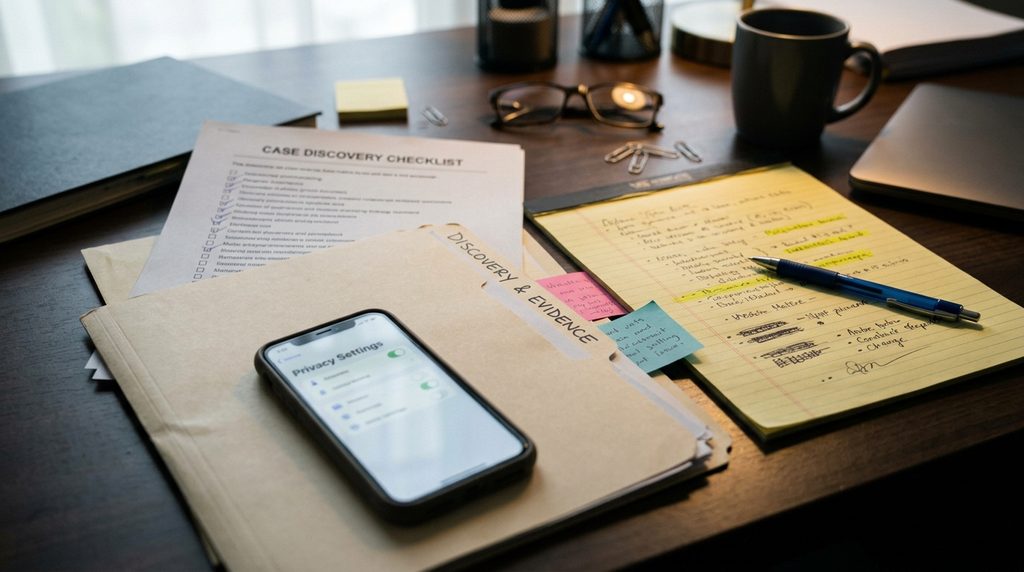
This does not mean every private post must be turned over. It means private account settings alone are not enough to prevent disclosure if the material is relevant to the claims or defenses.
Relevant questions may include:
- What injuries are claimed?
- What limitations are claimed?
- What damages are disputed?
- What social media material is being requested?
- Is the request narrowly tailored?
- Does the request seek relevant photos, videos, or posts?
- Does the request sweep in unrelated private content?
- Are there privacy or sensitivity concerns?
The court’s focus is usually relevance, proportionality, and proper scope.
An Entire Account Is Not Automatically Discoverable
Although social media can be discoverable, a personal injury lawsuit does not automatically open every post, message, photo, and account detail to the opposing side. New York courts have rejected broad access to an entire social media account when the request is not properly tied to relevant issues. New York Courts
A discovery request may be challenged when it seeks:
- Every photo from all accounts
- Every private message
- Every post on every topic
- Years of unrelated activity
- Sensitive content with little relevance
- Content unrelated to injuries or damages
- Communications with no connection to the claim
- Broad account access rather than specific categories
Courts may require a more tailored request that identifies the type of content being sought and why it matters to the case.
How Courts May Review Social Media Requests
In Forman v. Henkin, the Court of Appeals described a case-specific approach. Courts should consider the nature of the event, the injuries claimed, and other case-specific information to assess whether relevant material is likely to be found. Courts should also balance potential usefulness against privacy or other concerns and issue an order tailored to the controversy. New York Courts
This means social media requests are not all treated the same. A claim involving severe mobility restrictions may lead to different social media discovery than a claim involving a limited soft tissue injury. A claim involving emotional distress may raise different issues from a claim involving only property damage.
Court review may consider:
- The accident type
- The injuries claimed
- The activity limitations claimed
- The time period requested
- Whether public posts suggest relevant private content
- Whether the request is too broad
- Whether private or sensitive information is involved
- Whether redaction or limited production is appropriate
How Insurance Companies Use Social Media
Insurance companies may review social media early in the claim, even before litigation begins. Public content is often easy to find and may be compared with medical records, recorded statements, surveillance footage, and settlement demands.
Insurers may look for posts showing:
- Physical activities
- Travel or vacations
- Exercise or sports
- Parties or social events
- Work activity
- Home projects
- Driving
- Carrying objects
- Dancing
- Hiking
- Gym activity
- Recreational boating
- Motorcycle riding
- Contradictory statements about the accident
- Comments about being “fine” or “back to normal”
A single post rarely tells the full story, but it may still create questions that delay settlement or reduce offer value.
Posts Can Be Taken Out of Context
Social media is often incomplete. A person may post one smiling photo at a family event while still dealing with pain, limited movement, medication, therapy, or symptoms later that day. However, insurers may use the photo to argue that the injury is less serious than claimed.
Examples of context issues include:
- A short activity may not show pain afterward.
- A smiling photo may not show medication use.
- A travel post may not show mobility aids or rest breaks.
- A gym photo may be old or staged.
- A tagged photo may be from before the accident.
- A work-related post may not mean full work capacity.
- A video clip may not show the full limitation.
The best way to reduce context problems is to avoid posting about injuries, activities, treatment, settlement, or the accident while the claim is active.
Social Media and Injury Severity
Injury severity may be challenged if social media appears inconsistent with the claim. This is especially true when a person claims serious pain, physical restrictions, inability to work, emotional distress, or loss of normal activities.
Posts may be compared with:
- Medical records
- Physical therapy notes
- Work restrictions
- Disability forms
- Pain management records
- Recorded statements
- Deposition testimony
- Settlement demand letters
- Doctor reports
- Surveillance footage
A personal injury case result can provide general context for injury claims, but every case depends on its own facts, medical evidence, liability issues, insurance coverage, and damages proof.
Social Media and Daily Activity Claims
Pain and suffering often includes limitations in normal daily life. Social media may be used to question whether those limitations are accurate.
Daily activity claims may involve:
- Difficulty walking
- Difficulty lifting
- Difficulty driving
- Difficulty sleeping
- Reduced social activity
- Less family involvement
- Inability to exercise
- Reduced household chores
- Less recreation
- Avoiding travel
- Inability to perform job duties
A defense argument may focus on posts that appear to show normal activity. The injured person’s response may require context from medical records, testimony, time limits, pain flare-ups, or the difference between one activity and full recovery.
Social Media and Emotional Distress Claims
When emotional distress, anxiety, depression, fear, social withdrawal, embarrassment, or loss of enjoyment is part of the claim, social media may become relevant. Posts showing social events, travel, humor, hobbies, or public activity may be used to challenge emotional distress allegations.
However, emotional distress is not disproven by one photo or post. People can experience distress while still attending family events or trying to continue normal life.
Evidence may include:
- Therapy records
- Medical notes
- Medication records
- Sleep problems
- Family observations
- Reduced activity pattern
- Changes from pre-accident behavior
- Consistent symptom reporting
Social media should be understood as one piece of evidence, not the entire claim.
Social Media and Lost Wage Claims
Social media can affect lost wage claims when posts appear to show work activity, side jobs, business promotion, travel for work, physical tasks, or income-generating activity.
Relevant posts may include:
- New job announcements
- Freelance work posts
- Business promotions
- Physical labor photos
- Event work photos
- Driving or delivery activity
- Construction or trade work
- Real estate showings
- Fitness training or coaching
- Paid content creation
- Travel for business
Lost wage claims should be supported by employer letters, pay records, tax records, disability forms, work restrictions, and medical documentation.
Social Media and Credibility
Credibility matters in injury claims. Inconsistent social media posts can create credibility issues even when the injury is real.
Credibility concerns may arise when:
- Posts contradict medical restrictions.
- Comments contradict statements to insurers.
- Photos appear inconsistent with testimony.
- Posts suggest undisclosed work.
- The person discusses settlement publicly.
- The person deletes content after a claim begins.
- Friends tag the person in activity photos.
- Public comments minimize injuries.
- Posts appear to joke about the accident or claim.
Credibility issues can affect settlement negotiations, depositions, and trial strategy.
Should Social Media Accounts Be Deleted?
Deleting a social media account or removing posts after an accident can create problems. If litigation is reasonably anticipated, relevant evidence should generally be preserved. Deleting content may lead to disputes about spoliation, discovery, credibility, or sanctions.
New York CPLR § 3126 gives courts authority to impose remedies when a party refuses to obey a disclosure order or willfully fails to disclose information that should have been disclosed. NYSenate.gov
Instead of deleting content, the safer approach is usually:
- Stop posting about the accident.
- Preserve existing posts.
- Avoid editing relevant posts.
- Save screenshots if needed.
- Download account data when appropriate.
- Review privacy settings without destroying evidence.
- Avoid discussing the claim online.
- Ask friends not to tag injury-related activity.
The goal is not to hide evidence. The goal is to avoid creating misleading or unnecessary social media issues.
Should Privacy Settings Be Changed?
Changing privacy settings may reduce future public viewing, but it does not automatically protect relevant content from discovery. It also does not erase the duty to preserve relevant material.
Changing settings may help limit:
- Public comments from strangers
- New public photo access
- New tagged posts
- Public visibility of future content
- Unnecessary outside attention
However, privacy settings should not be used to conceal, delete, alter, or destroy relevant evidence.
Tagged Photos Can Also Matter
Tagged photos and videos can create problems even if the injured person did not post them. Friends, family members, coworkers, gyms, event venues, clubs, restaurants, or businesses may post images showing the injured person after the accident.

Tagged content may show:
- Physical activity
- Social events
- Travel
- Work activity
- Sports
- Dancing
- Recreational activities
- Lifting or carrying items
- Boating or outdoor activity
- Public statements by others
The injured person should be careful about being tagged in posts that could be misunderstood or taken out of context.
Social Media and Recorded Statements
A recorded statement may be compared with social media content. If an injured person tells an adjuster they cannot walk long distances, but a post shows hiking, the insurer may ask questions. The post may have an explanation, but the inconsistency can still create a dispute.
Recorded statement issues may involve:
- Activity level
- Pain severity
- Work ability
- Travel
- Exercise
- Household tasks
- Social events
- Driving
- Emotional distress
- Medical treatment
The safest approach is to give accurate statements and avoid social media posts that oversimplify or contradict the injury timeline.
Social Media in Car Accident Claims
Car accident claims may involve no-fault benefits, bodily injury claims, serious injury issues, medical treatment, lost income, and pain and suffering. Social media may be reviewed to evaluate whether the injured person’s activity level matches the claimed limitations.
A car accident attorney resource may help explain why no-fault paperwork, medical records, accident evidence, and injury restrictions often need to be reviewed together.
Social media may affect car accident claims involving:
- Back pain
- Neck pain
- Fractures
- Concussion symptoms
- Shoulder injuries
- Knee injuries
- Anxiety about driving
- Lost wage claims
- Serious injury threshold issues
- Work restrictions
- Pain and suffering
Social Media in Slip, Trip, and Premises Liability Claims
Premises liability claims may involve falls on wet floors, broken sidewalks, snow and ice, parking lots, unsafe stairs, poor lighting, or property hazards. Social media may be used to question how the injury affected mobility, balance, walking, standing, exercise, or work.
A premises liability attorney resource may help explain why property evidence, maintenance records, medical documentation, and activity limitations often matter in unsafe-property claims.
Relevant social media may involve:
- Walking long distances
- Wearing certain footwear
- Sports or fitness activity
- Travel after the fall
- Work activity
- Photos of visible injuries
- Posts about the incident
- Comments blaming or minimizing the hazard
Social Media in Workplace and Construction Claims
Workplace and construction injury claims may involve workers’ compensation, third-party liability, physical restrictions, wage loss, and future earning capacity. Social media may become relevant when posts show work activity, side work, lifting, equipment use, travel, or physical tasks.
A workplace accident lawyer resource may help readers understand why medical records, work restrictions, wage proof, and jobsite evidence often overlap.
Social media may affect disputes involving:
- Work status
- Side jobs
- Physical restrictions
- Lifting limits
- Construction activity
- Contractor work
- Tool use
- Travel for work
- Recreational physical activity
- Pain and suffering
Social Media in Nursing Home Claims
Social media may also matter in nursing home negligence claims, especially when family members post photos, updates, complaints, or statements about the resident’s condition. Posts may help document injuries, but they may also raise privacy or evidence concerns.
Relevant content may include:
- Photos of visible injuries
- Timeline updates
- Family observations
- Facility complaints
- Messages with staff
- Posts about falls or care issues
- Hospital transfer updates
- Condition changes
- Public comments about the facility
Because nursing home claims may involve sensitive medical and privacy issues, public posting should be handled carefully.
Social Media in Dog Bite Claims
Dog bite claims may involve injury photos, scarring, emotional distress, fear of animals, medical treatment, and owner knowledge. Social media posts may help document injury progression, but they may also create issues if the claim is discussed publicly.
Social media may involve:
- Photos of wounds
- Scarring photos
- Posts about the dog owner
- Comments about the incident
- Animal-related activity after the attack
- Fear or emotional distress comments
- Medical treatment updates
- Fundraising posts
- Messages from witnesses
A dog bite lawyer resource may help explain why medical treatment, photos, animal control records, and witness details may matter in these claims.
Social Media in Boating Accident Claims
Boating accident claims may involve vessel operation, operator conduct, alcohol allegations, unsafe wake, rental records, marina activity, passenger behavior, and injury evidence. Social media may become relevant when posts show the boating trip, vessel, dock, weather, passengers, or activity after the accident.
Relevant social media may include:
- Boating photos
- Passenger videos
- Location tags
- Marina posts
- Weather-related posts
- Alcohol-related images
- Vessel operation clips
- Dock or launch area photos
- Injury updates
- Activity after the accident
A boating accident lawyer Long Island resource may help explain why digital evidence, vessel records, medical proof, and witness information may all matter after a watercraft injury.
Discovery Requests for Social Media
During litigation, the opposing party may request social media materials through discovery. CPLR § 3101 provides for full disclosure of matter material and necessary in the prosecution or defense of an action. CPLR § 3120 addresses discovery and production of documents and things for inspection, testing, copying, or photographing. NYSenate.gov
A social media discovery request may seek:
- Photos after the accident
- Videos after the accident
- Posts about physical activity
- Posts about the accident
- Posts about emotional distress
- Location check-ins
- Account data for a specific time period
- Messages relevant to the claim
- Tagged content
- Deleted content information, if disputed
A request may be challenged if it is overly broad, irrelevant, disproportionate, or seeks sensitive material with little connection to the claim.
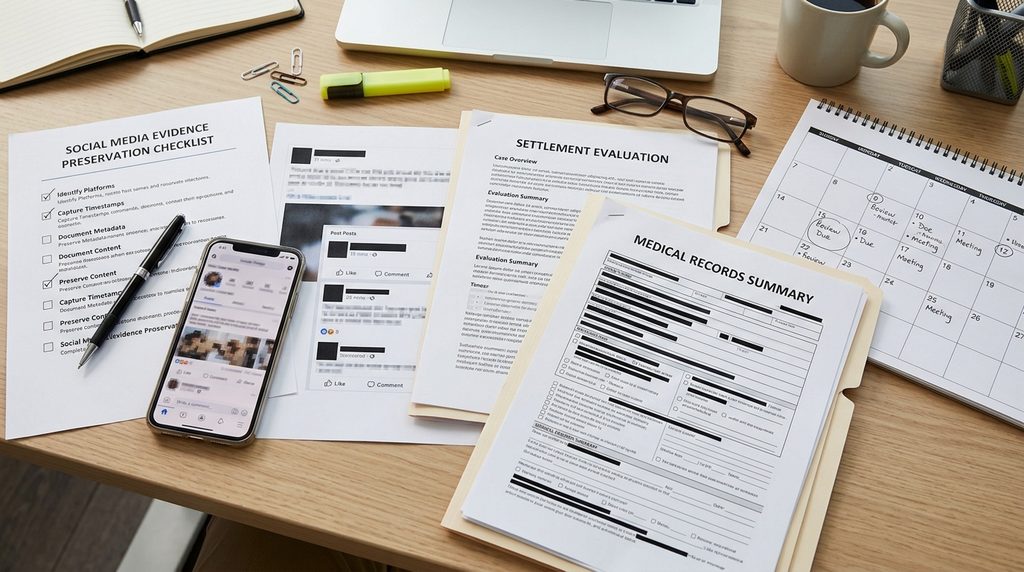
Social Media Preservation Checklist
Social media should be handled carefully after an accident. The goal is to preserve evidence and avoid creating avoidable disputes.
Helpful steps may include:
- Do not post about the accident.
- Do not post about injuries or treatment.
- Do not discuss settlement or insurance.
- Do not delete posts without legal guidance.
- Do not edit relevant posts.
- Save existing relevant content.
- Review privacy settings without destroying evidence.
- Avoid exaggerating or minimizing symptoms online.
- Ask friends not to tag accident-related or activity posts.
- Keep medical records and social media activity consistent.
- Avoid posting physical activities that can be misunderstood.
- Preserve messages from witnesses when relevant.
Practical Social Media Review Chart
| Social Media Issue | Why It Matters | What to Watch |
| Photos and videos | May appear inconsistent with injury claims | Activity, movement, travel, sports, work |
| Comments | May contradict claim statements | Accident details, pain level, settlement comments |
| Location tags | May show travel or activity | Events, trips, work locations, gyms |
| Tagged posts | Others may post content without context | Friends, family, businesses, event venues |
| Private posts | Privacy settings do not automatically block discovery | Relevance, scope, tailored requests |
| Deleted content | May create preservation or credibility issues | Account changes, post removal, message deletion |
| Work posts | May affect lost wage claims | Side jobs, business activity, physical labor |
| Emotional posts | May affect emotional distress claims | Social activity, public statements, mental health context |
Common Mistakes With Social Media During an Injury Claim
Some mistakes can create unnecessary disputes or reduce claim value.
Common mistakes include:
- Posting about the accident
- Posting injury updates
- Discussing settlement online
- Deleting posts after the claim begins
- Assuming private posts cannot be discovered
- Accepting unknown friend requests
- Letting friends tag physical activity photos
- Posting travel, fitness, or work activity without context
- Making jokes about the claim
- Contradicting recorded statements
- Minimizing pain publicly
- Exaggerating symptoms publicly
- Sharing legal strategy or attorney communications
- Ignoring old posts that may be relevant
The safest approach is to keep claim-related information offline and preserve existing content.
How to Document Online Evidence Properly
Sometimes social media can help an injury claim. Witness messages, accident photos, public posts from a business, venue videos, dog owner posts, trucking company posts, marina photos, or tagged content may support liability or damages.
Useful documentation may include:
- Screenshots with date and time
- Original URLs when available
- Account names
- Full post context
- Comments and replies
- Photos in original format
- Videos in original format
- Downloaded account data
- Witness messages
- Public posts by businesses or facilities
- Location-tagged posts
- Metadata when available
Original files should be preserved when possible. Screenshots can help, but originals may contain more useful information.
Social Media and Settlement Negotiations
Social media can affect settlement negotiations if the insurer believes posts weaken injury claims or credibility. Even if the posts are explainable, they may give the insurer a reason to delay, request more records, reduce an offer, or push for litigation.
Settlement issues may involve:
- Disputed injury severity
- Questioned activity limitations
- Lost wage disputes
- Emotional distress disputes
- Prior inconsistent statements
- Credibility arguments
- Requests for more discovery
- Defense medical examination arguments
- Lower settlement offers
The strongest settlement position usually comes from consistent medical records, accurate statements, preserved evidence, and careful online behavior.
Social Media and Trial
At trial, social media may be used to support or challenge testimony. Posts may be shown to a witness, compared with testimony, or used to argue credibility. The court may decide what social media evidence is admissible based on relevance, authentication, prejudice, and other evidentiary issues.
Trial-related questions may include:
- Is the post authentic?
- Who created it?
- When was it posted?
- What does it show?
- Is it relevant?
- Is it taken out of context?
- Is it more prejudicial than useful?
- Does it contradict testimony?
- Does it support or challenge damages?
A post that seemed harmless when published may look different in a courtroom.
Deadlines Still Matter
Social media issues can complicate a claim, but they do not pause legal deadlines. New York Courts lists three years for many car accident, slip and fall, and negligence-based personal injury claims. Different or shorter rules may apply to wrongful death, public entity claims, no-fault insurance, workers’ compensation, and other matters. New York Courts
Timing issues may involve:
- No-fault claim notice
- Medical bill submission
- Lost wage proof
- Public entity notice of claim
- Workers’ compensation filings
- Evidence preservation
- Discovery deadlines
- Expert disclosure dates
- Court filing deadlines
Social media should be preserved early, but legal timing must also be tracked carefully.
When Legal Guidance May Be Useful
Legal guidance may be useful when social media posts are being requested in discovery, an insurer is using posts to challenge injury severity, private account content is disputed, posts were deleted, tagged photos create confusion, or online content appears inconsistent with medical records.
A social media evidence review may require account history, screenshots, public posts, private posts, tagged content, medical records, recorded statements, deposition testimony, insurance letters, and discovery requests.
People researching local support may review a Farmingdale personal injury office when looking for Long Island personal injury claim information.
FAQs About Social Media and New York Personal Injury Claims
Can social media be used in a New York personal injury claim?
Yes. Social media may be used when posts, photos, videos, comments, tags, or messages are relevant to injury severity, physical activity, emotional distress, lost income, accident facts, or credibility.
Are private social media posts protected from discovery?
Not automatically. New York courts have explained that privacy settings do not control discoverability. Relevant private materials may be discoverable, but requests should be tailored and should avoid unrelated material. New York Courts
Should someone delete social media posts after an accident?
Deleting posts can create problems if the content is relevant or should have been preserved. A safer approach is to stop posting about the accident, avoid new claim-related content, preserve existing material, and handle discovery requests properly.
Can tagged photos affect an injury claim?
Yes. Tagged photos or videos from friends, family, businesses, or event pages may be reviewed if they appear relevant to physical activity, travel, work ability, emotional distress, or daily limitations.
Does filing a personal injury lawsuit make an entire social media account discoverable?
No. New York courts have rejected automatic full-account disclosure. Courts generally look at relevance, the injuries claimed, the specific materials requested, privacy concerns, and whether the order should be tailored to the dispute. New York Courts
Final Thoughts
Social media can affect a New York personal injury claim because posts, photos, videos, comments, tags, and private account content may be compared with medical records, statements, work restrictions, and damages claims. Privacy settings do not automatically prevent relevant discovery, but a lawsuit does not automatically make an entire account open to review. The safest approach is to preserve existing content, avoid posting about the accident or claim, keep online activity consistent with medical evidence, and treat social media as potential evidence from the start.