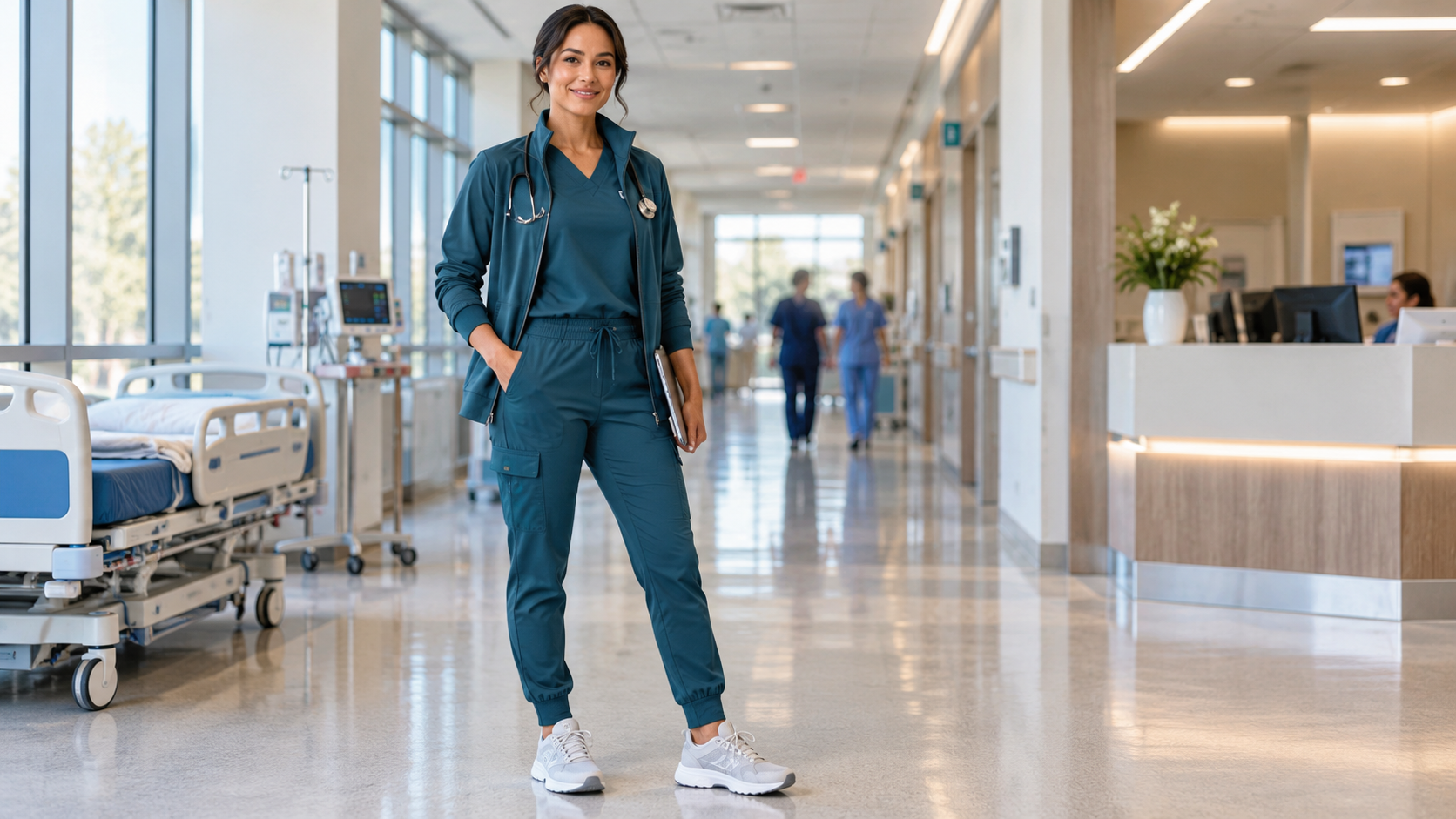

The best scrub pants for nurses should remain secure at the waist, allow unrestricted movement, provide useful pocket storage, and maintain a comfortable fit through long periods of walking, standing, sitting, and bending. Waistband construction, rise, fabric stretch, hip and thigh room, inseam length, and pocket placement all influence how scrub pants feel over an extended shift.
No single pant style works best for every nurse. The right choice depends on body proportions, clinical setting, workplace dress code, storage needs, footwear, and personal fit preferences.
Quick Answer
When choosing scrub pants for nursing work, look for:
- A waistband that stays secure without digging into the waist
- Enough stretch for sitting, bending, walking, and reaching
- Fabric that recovers after movement instead of sagging
- A rise that remains comfortable in both standing and seated positions
- Adequate room through the hips, thighs, and knees
- An inseam that works with normal work shoes
- Pockets positioned for useful, lightweight storage
- A leg shape that supports movement without excessive fabric
- Fabric weight suited to workplace temperature
- Care requirements compatible with frequent laundering
The best scrub pant is the one that fits correctly through the entire lower body rather than simply matching the wearer’s usual size.
Why Does Scrub Pant Fit Matter for Nurses?
Nursing work may involve long periods of standing and walking along with bending, stretching, sitting, and repeated changes in position. The U.S. Bureau of Labor Statistics describes walking, bending, stretching, and standing as common physical demands for registered nurses.
Because scrub pants are worn through these movements, small fit problems can become more noticeable as a shift continues.
Examples include:
- A waistband that rolls while sitting
- Pants sliding downward when pockets are loaded
- Tightness through the thighs while bending
- Fabric collecting behind the knees
- A rise that pulls while seated
- An inseam that drags under work shoes
- Cargo pockets striking the leg while walking
- Cuffs that become restrictive around the ankle
Professionals comparing comfortable scrub pants should evaluate how the entire garment moves rather than judging comfort only by fabric softness.
What Makes Scrub Pants Comfortable for a Long Shift?
Comfort is created by several features working together.
The main factors are:
- Waistband construction
- Pant rise
- Hip and thigh room
- Fabric stretch
- Stretch recovery
- Knee mobility
- Leg shape
- Inseam length
- Pocket placement
- Fabric weight
A scrub pant can perform well in nine areas and still feel uncomfortable if one major fit point is wrong.
For example, highly flexible fabric cannot correct a rise that is too short. A soft waistband cannot compensate for pants that are too tight through the thighs.
Which Waistband Is Best for Nurses?
There is no single best waistband. The right design depends on body shape, rise preference, pocket weight, and how the wearer moves throughout the shift.
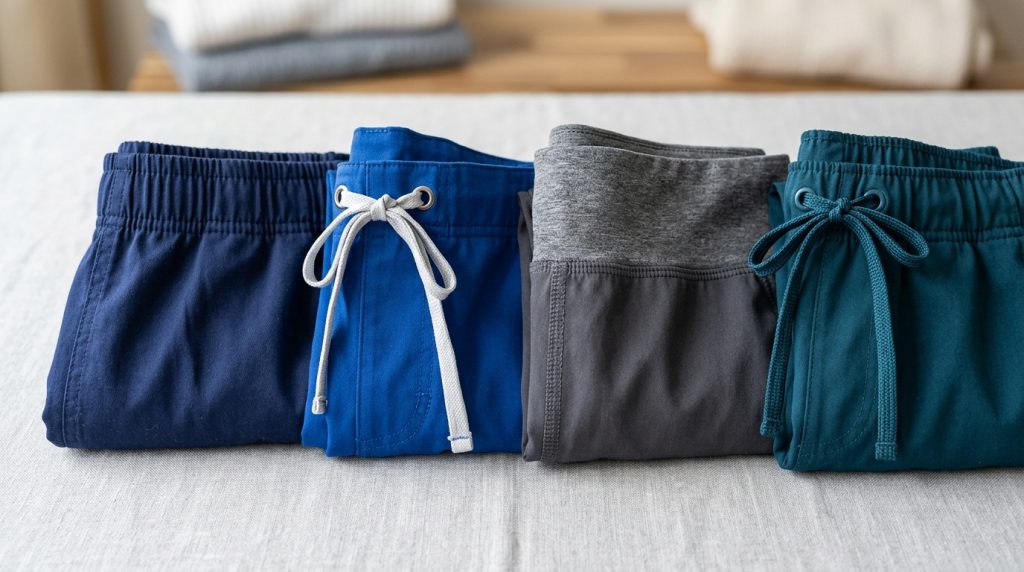
Full Elastic Waistbands
A full elastic waistband stretches around the entire waist.
Potential advantages include:
- Simple construction
- Consistent support
- Easy dressing
- Flexibility during movement
- No drawstring knot
A properly fitted elastic waistband should remain secure without creating excessive pressure.
Possible problems include:
- Rolling
- Folding
- Stretching out
- Digging into the waist
- Sliding downward
If the elastic feels comfortable while standing but becomes painful while sitting, the waistband tension or rise may not suit the wearer.
Drawstring Waistbands
Drawstrings provide adjustable tension.
They may be useful for nurses who:
- Fall between standard sizes
- Need additional waist security
- Carry items in their pockets
- Prefer adjustable pressure throughout the day
The drawstring should tighten the waistband without causing the fabric to bunch excessively.
The knot should also sit comfortably beneath the scrub top.
Elastic-and-Drawstring Waistbands
Hybrid waistbands combine elastic support with manual adjustment.
They are often practical for nursing because pocket contents can change throughout the shift.
A nurse may begin with relatively empty pockets and later carry additional permitted items. The drawstring can help maintain a stable fit when the load changes.
Yoga-Style Waistbands
A wide knit waistband spreads pressure across a larger area.
Potential benefits include:
- Softer waist contact
- Reduced pressure concentration
- Comfortable seated fit
- Flexible movement
However, the waistband needs sufficient recovery.
A poorly fitted knit waistband may:
- Roll
- Fold
- Stretch out
- Slide downward
- Lose support when pockets are loaded
Flat-Front Waistbands
Flat-front scrub pants may create a more tailored appearance.
They often combine a structured front with:
- Elastic sides
- Elastic back panels
- Internal drawstrings
- Stretch fabric
The front closure should remain comfortable when the wearer sits or bends.
How Should a Scrub Pant Waistband Be Tested?
Do not test the waistband only while standing.
Wear the pants for several minutes and perform a basic movement test.
Step 1: Stand Naturally
The waistband should remain in place without requiring constant tightening.
Step 2: Sit Fully
Sit against the back of a chair.
Check whether the waistband:
- Digs into the abdomen
- Rolls
- Slides downward
- Creates pressure at the sides
- Feels significantly tighter than when standing
Step 3: Stand Again
The pants should return to position without needing to be pulled upward.
Step 4: Bend
Bend carefully at the hips and knees.
The waistband should maintain appropriate coverage.
Step 5: Add Normal Pocket Items
Place typical lightweight items in the pockets and repeat the test.
A waistband that works perfectly when the pants are empty may behave differently under additional weight.
Why Is Pant Rise Important for Nurses?
Rise describes how the pants fit between the waistband and crotch.
Common categories include:
- Low rise
- Mid rise
- Natural rise
- High rise
These terms are not standardized across all scrub brands.
A mid-rise pant from one collection may sit differently from a mid-rise pant from another.
Signs the Rise May Be Too Short
- Pulling through the crotch while sitting
- Waistband sliding downward when bending
- Reduced back coverage
- Tightness through the hips
- Discomfort during longer strides
Signs the Rise May Be Too Long
- Excess fabric below the waistband
- Loose material through the seat
- Low-hanging crotch
- Bunching during walking
- Pants shifting around the body
High-Rise Scrub Pants
High-rise pants may appeal to nurses who prefer:
- More abdominal coverage
- A higher waistband
- Additional security during bending
- Pairing with tuckable scrub tops
The waistband should still remain comfortable while seated.
Mid-Rise Scrub Pants
Mid-rise pants are common because they balance coverage with moderate waistband height.
They may work well for many body types, but actual fit should determine the decision.
How Much Stretch Do Nursing Scrub Pants Need?
Stretch can improve mobility, particularly in fitted scrub pants.
Useful stretch may support:
- Sitting
- Squatting
- Bending
- Walking quickly
- Raising the knee
- Climbing stairs
- Repeated position changes
However, more stretch does not automatically equal more comfort.
Stretch Must Be Paired With Recovery
Recovery describes how well fabric returns to its original shape after extension.
Poor recovery can cause:
- Sagging knees
- Loose seat fabric
- Stretched waistbands
- Distorted pockets
- Bagging through the thighs
A scrub pant may feel highly flexible at the beginning of a shift but become loose later if the material does not recover effectively.
How to Test Stretch Recovery
Gently extend a section of fabric and release it.
Look for whether the material:
- Returns quickly
- Remains stretched
- Develops ripples
- Becomes noticeably thin
- Loses its original shape
When buying online, repeated reviews mentioning knee bagging, stretching out, or sagging may provide useful clues.
Does Four-Way Stretch Matter?
Four-way stretch generally means the fabric extends both horizontally and vertically.
It can be helpful in:
- Joggers
- Tapered pants
- Slim-fit pants
- High-movement roles
- Pants with fitted thighs
However, four-way stretch does not guarantee a good fit.
A pant can still be uncomfortable if it has:
- The wrong rise
- Insufficient thigh room
- A narrow calf
- Incorrect inseam
- A waistband that slips
A relaxed straight-leg pant with moderate stretch may feel more comfortable than an undersized four-way-stretch jogger.
Which Fabric Is Best for Nursing Scrub Pants?
Common fibers used in scrub pants include:
- Polyester
- Cotton
- Rayon or viscose
- Nylon
- Spandex or elastane
The Federal Trade Commission provides textile fiber labeling guidance, which explains the fiber-content information typically required on covered apparel.
Fiber percentages are useful, but they do not tell the entire story.
Fabric performance also depends on:
- Weight
- Weave or knit
- Surface finish
- Stretch direction
- Recovery
- Garment construction
Polyester-Rich Scrub Pants
Polyester may contribute to:
- Shape retention
- Wrinkle resistance
- Faster drying
- Smooth texture
- Color consistency
A polyester-rich fabric may still feel either lightweight or relatively dense depending on its construction.
Cotton Blends
Cotton may contribute:
- Softness
- Familiar texture
- Moderate structure
- A less slick feel
Potential considerations include:
- Longer drying time
- Wrinkling
- Shrinkage depending on care
- Heavier feel in some fabrics
Rayon or Viscose Blends
These fibers can add:
- Softness
- Flexibility
- Fluid drape
- Smooth movement
A highly draping fabric may feel comfortable but can show pocket weight or lose a sharply defined silhouette more easily.
Nylon Blends
Nylon may contribute:
- Lightweight construction
- Durability
- Smoothness
- Flexibility
Performance depends on the full blend.
Spandex or Elastane
Elastic fibers support stretch.
Even a relatively small percentage may provide noticeable flexibility, but the complete fabric construction remains more important than the number alone.
How Should Scrub Pants Fit Through the Hips and Thighs?
The hips and thighs need enough room for both movement and seated comfort.
Signs the Pants May Be Too Tight
- Horizontal tension lines
- Front pockets pulling open
- Tightness while sitting
- Limited stride length
- Fabric stretched constantly across the thighs
- Side seams shifting
- Difficulty bending the knees comfortably
Signs the Pants May Be Too Loose
- Excess seat fabric
- Large folds through the thighs
- Pants rotating during movement
- Pockets hanging away from the body
- Fabric collecting behind the knees
The best solution may be a different cut rather than simply moving up or down one size.
Which Scrub Pant Style Is Best for Nurses?
Different leg shapes provide different benefits.
Jogger Scrub Pants
Joggers taper toward the ankle and usually include a cuff.
Potential benefits include:
- Reduced fabric near footwear
- Modern appearance
- Defined ankle
- Less chance of a wide hem dragging
Potential limitations include:
- Tight calf fit
- Restrictive ankle cuffs
- Cuffs riding upward
- Less airflow around the lower leg
Joggers work best when the thighs, calves, rise, and cuff all fit comfortably.
Tapered Scrub Pants
Tapered pants narrow gradually toward the ankle without necessarily using an elastic cuff.
They can provide:
- Streamlined appearance
- Moderate lower-leg room
- Conventional hem
- Compatibility with many work shoes
Straight-Leg Scrub Pants
Straight-leg pants maintain more consistent width through the leg.
They may suit nurses who prefer:
- Greater calf room
- Traditional workwear styling
- Less restriction below the knee
- More space around footwear
Cargo Scrub Pants
Cargo pants add thigh-level storage.
They may be particularly useful when scrub-top storage is limited.
However, loaded cargo pockets can:
- Pull the waistband
- Swing against the leg
- Create uneven weight
- Become uncomfortable while sitting
Flare or Bootcut Scrub Pants
Flare styles widen below the knee.
They may appeal to nurses who prefer:
- More lower-leg room
- A fitted upper-leg silhouette
- A broader hem
Correct inseam is especially important because a wide hem can drag if it is too long.
How Many Pockets Do Nurses Need in Scrub Pants?
The right number depends on the individual nurse’s work routine.

Potential pocket items may include:
- Pens
- Small notebook
- Work communication device
- Phone when permitted
- Identification accessories
- Small approved tools
- Keys
Professionals searching for best scrub pants for nurses should focus on pocket placement and security rather than maximum pocket count.
Front Pockets
Front pockets provide quick access.
They should:
- Remain flat
- Be deep enough for intended items
- Avoid gaping
- Stay comfortable while sitting
Cargo Pockets
Cargo pockets provide thigh-level storage.
Check:
- Pocket depth
- Closure
- Dominant-hand access
- Position while seated
- Whether stored items move excessively
Back Pockets
Back pockets may be useful for lightweight, flat items.
Bulky objects can create pressure during sitting and may be better stored elsewhere.
Zippered Pockets
Zippered pockets may help secure:
- Keys
- Cards
- Small personal items
The zipper should not press against the leg.
Internal Dividers
Dividers can separate:
- Pens
- Small accessories
- Narrow tools
The compartments should remain easy to empty before laundering.
Can Too Many Pockets Make Scrub Pants Uncomfortable?
Yes.
Additional pockets add:
- Fabric layers
- Seams
- Weight
- Bulk
They may also encourage the wearer to carry more items than necessary.
Warning signs of excessive pocket weight include:
- Waistband slipping
- One pant leg hanging lower
- Side seams rotating
- Pocket openings sagging
- Items striking the leg while walking
- Discomfort during sitting
The ideal pocket system provides enough storage without turning scrub pants into an equipment carrier.
What Should Not Be Carried in Scrub Pockets?
Ordinary scrub pockets are not appropriate storage for hazardous items.
OSHA’s needlestick and sharps injury guidance emphasizes appropriate disposal of contaminated sharps in designated sharps containers.
Items that should not be loosely carried in scrub pockets include:
- Used needles
- Contaminated sharps
- Unprotected blades
- Leaking containers
- Unsecured specimens
- Items prohibited by workplace policy
- Objects capable of puncturing the garment
The availability of a pocket does not override workplace safety procedures.
Why Does Inseam Length Matter for Nurses?
Incorrect inseam can create both comfort and practical problems.
Pants that are too long may:
- Drag on the floor
- Collect around footwear
- Fold beneath the heel
- Bunch behind the knee
- Wear prematurely at the hem
Pants that are too short may:
- Rise excessively while sitting
- Expose more ankle than intended
- Position knee shaping incorrectly
- Pull through the rise
Measure an Existing Pair
The most useful reference is often a pair of work pants that already fits correctly.
Measure from the crotch seam to the hem.
Then compare the measurement with the size chart for the scrub pant being considered.
What Are Petite Scrub Pants?
Petite scrub pants may adjust more than the inseam.
Depending on the manufacturer, petite sizing may alter:
- Rise
- Inseam
- Knee placement
- Overall proportion
- Leg taper
This makes petite sizing different from simply hemming a regular-length pant.
Who May Benefit From Petite Sizing?
Petite scrub pants may work well when regular pants:
- Bunch heavily behind the knees
- Have an excessively long rise
- Place the knee shaping too low
- Drag at the hem
- Feel proportionally oversized
Height alone does not determine whether petite sizing will fit correctly.
Petite vs Short-Length Scrub Pants
Petite and short-length pants are not always the same.
Petite pants may adjust the overall garment proportions.
Short-length pants may primarily reduce the inseam while retaining other regular-size proportions.
A nurse with a shorter inseam but standard rise may prefer short-length pants.
A nurse with shorter overall lower-body proportions may prefer petite sizing.
Always review the specific manufacturer’s size chart.
What About Tall Scrub Pants?
Tall sizing is designed for longer leg proportions and may sometimes alter more than inseam.
Tall pants may provide:
- Longer inseam
- Adjusted knee position
- Additional rise
- More overall length
A tall scrub pant should not be chosen simply because regular pants feel slightly short while standing.
Check the pant while:
- Sitting
- Walking
- Bending
- Wearing normal work shoes
How Does Footwear Affect Scrub Pant Fit?
Pant length should be checked with footwear similar to what will actually be worn during a shift.
Athletic Shoes
Joggers, tapered pants, straight-leg pants, and selected flare styles can all work with athletic footwear.
Clogs
Tapered and straight-leg hems commonly pair well with clogs.
Joggers may also work, depending on cuff height.
Slip-On Shoes
The hem should remain clear of the heel and should not catch under the shoe.
Bulkier Work Shoes
Straight-leg or subtle flare styles may provide more room around larger footwear.
Whatever the shoe, scrub pants should not:
- Drag
- Catch beneath the heel
- Restrict ankle movement
- Bunch excessively
Should Nurses Choose Fitted or Relaxed Scrub Pants?
Both can work well when sized correctly.
Fitted Pants
Potential advantages include:
- Reduced excess fabric
- Streamlined appearance
- Easy movement around equipment
- Modern styling
They should still provide enough room through the rise, hips, thighs, and knees.
Relaxed Pants
Potential advantages include:
- More air space
- Additional thigh room
- Less fabric tension
- Comfortable movement
They should not be so loose that:
- The waistband slips
- The crotch hangs excessively
- Fabric gathers heavily
- The pants twist during walking
Functional Fit Matters Most
Scrub pants should remain between restrictive and oversized.
A nurse should be able to complete normal movements without repeatedly:
- Pulling up the waistband
- Adjusting the thighs
- Fixing twisted pant legs
- Repositioning cuffs
- Emptying uncomfortable pockets
How Can Nurses Test Scrub Pants Before Buying?
A proper fitting should simulate actual movement.
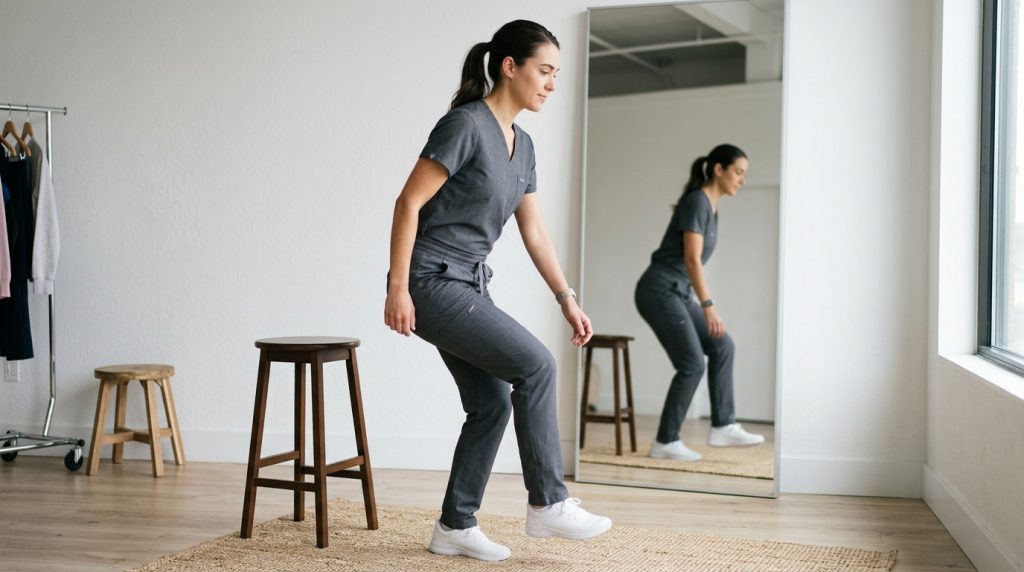
The Five-Minute Nursing Scrub Pant Test
Wear normal work underlayers and typical work shoes.
Then:
- Stand naturally.
- Sit fully in a chair.
- Stand without adjusting the waistband.
- Walk quickly.
- Bend carefully.
- Raise one knee.
- Take several long steps.
- Add normal lightweight pocket items.
- Check the waistband again.
- Check the hem and inseam.
Look for These Signs
The pants should not:
- Roll at the waist
- Slide downward
- Pull through the rise
- Restrict the thighs
- Bind behind the knees
- Twist during walking
- Drag at the hem
- Become unstable when pockets are loaded
Nurses who need to compare rises, waistbands, lengths, and fabrics in person may benefit from visiting a medical scrub store in Lincoln before selecting a complete scrub rotation.
Should Nurses Buy Scrub Pants Online?
Online buying can work well when measurements are known.
Before ordering, check:
- Waist measurement
- Hip measurement
- Rise
- Thigh fit
- Inseam
- Leg shape
- Calf width when relevant
- Fabric composition
- Stretch description
- Waistband construction
- Pocket layout
- Return policy
Do not rely only on the usual letter size.
Different scrub collections may use different proportions.
Why Should One Pair Be Tested Before Buying Several?
When trying a new scrub collection, purchase one pair first.
Wear the pants through normal at-home movement while tags remain attached.
Confirm:
- Waistband comfort
- Rise
- Hip room
- Thigh mobility
- Knee movement
- Pocket function
- Inseam
- Compatibility with work shoes
Only after the fit is approved should several identical pairs be ordered.
This reduces the risk of repeating the same sizing mistake across a full work wardrobe.
How Should Scrub Pants Be Washed?
Always follow the garment’s care label and workplace procedures.
The FTC’s Care Labeling Rule guidance explains that covered apparel should include regular care instructions.
Before washing scrub pants:
- Empty every pocket.
- Check cargo and hidden compartments.
- Close zippers when directed.
- Separate colors when recommended.
- Follow the stated wash temperature.
- Observe bleach restrictions.
- Use the recommended drying method.
Repeated exposure to inappropriate heat or laundering conditions may affect:
- Elastic
- Drawstrings
- Stretch recovery
- Fabric dimensions
- Surface texture
- Color
The CDC also provides healthcare laundry guidance covering the handling of healthcare textiles, including uniforms and scrub suits. Workplace policies should take priority when garments require specific handling.
When Should Scrub Pants Be Replaced?
Scrub pants may need replacement when they no longer provide:
- Secure waistband support
- Proper coverage
- Reliable pocket structure
- Correct fit
- Acceptable fabric condition
Common signs include:
- Stretched-out elastic
- Persistent knee bagging
- Damaged seams
- Torn pocket corners
- Broken zippers
- Excessive pilling
- Permanent stains
- Frayed hems
- Fabric becoming too thin
- Drawstrings no longer functioning
A garment does not need to fail completely before replacement becomes appropriate.
Common Scrub Pant Buying Mistakes
Choosing by Appearance Alone
A fashionable silhouette does not guarantee long-shift comfort.
Ignoring the Rise
Correct waist and hip measurements can still result in poor fit if the rise is wrong.
Choosing More Stretch Instead of Better Fit
Stretch cannot fully correct an undersized garment.
Selecting Maximum Pocket Count
More pockets may add unnecessary weight and bulk.
Overloading Cargo Pockets
Heavy thigh storage can distort the pants and pull the waistband.
Selecting Length Only by Height
People of similar height may have different inseams.
Assuming Petite Means Shortened Regular Pants
Petite sizing may modify several proportions.
Testing Only While Standing
Seated fit can reveal waistband and rise problems.
Ignoring Work Shoes
The correct hem depends partly on footwear.
Buying Several Pairs Immediately
Test one new style first.
A Practical Scrub Pant Buying Checklist for Nurses
Waist and Rise
- Does the waistband remain secure?
- Is seated pressure comfortable?
- Does the rise provide appropriate coverage?
- Does the waistband remain stable when pockets are loaded?
Hips and Thighs
- Can the wearer sit without pulling?
- Are the pockets lying flat?
- Is the stride unrestricted?
- Can the knees bend comfortably?
Leg Shape
- Do jogger cuffs fit?
- Is the calf too tight?
- Does a straight leg create excess fabric?
- Does a flare remain clear of the floor?
Inseam
- Does the length work while standing?
- Does it remain appropriate while sitting?
- Does the hem work with normal work shoes?
Fabric
- Is there enough stretch?
- Does the fabric recover?
- Is the weight suitable?
- Does the material provide appropriate coverage?
Pockets
- Are frequently used pockets accessible?
- Do items stay secure?
- Does pocket weight affect the waistband?
- Are unnecessary pockets adding bulk?
Conclusion
The best scrub pants for nurses combine a secure waistband, appropriate rise, reliable stretch, useful pockets, correct leg shape, and accurate inseam.
No individual feature should be evaluated in isolation.
A highly flexible fabric can still feel uncomfortable with the wrong rise. A soft waistband can still fail when overloaded pockets pull the pants downward. A modern jogger can still be restrictive when the calf or cuff is too narrow.
The strongest approach is to test scrub pants as professional workwear.
Sit in them. Walk in them. Bend in them. Load the normal pockets. Wear the usual shoes.
A well-selected pair should remain comfortable and secure throughout those movements without requiring constant adjustment.
Frequently Asked Questions
What are the best scrub pants for nurses?
The best scrub pants provide a secure waistband, comfortable rise, adequate hip and thigh room, useful stretch, appropriate pockets, and the correct inseam. The ideal style varies by body proportions, workplace requirements, and personal preference.
Are jogger scrub pants comfortable for nurses?
Joggers can be comfortable when the rise, waistband, thighs, calves, cuff, and inseam fit correctly. Nurses who dislike fitted ankles or have fuller calves may prefer tapered or straight-leg scrub pants.
Which waistband is best for nursing scrubs?
Full elastic, drawstring, yoga-style, and hybrid waistbands can all work well. The best option is one that remains secure without rolling, slipping, or creating excessive pressure while standing, sitting, and moving.
How many pockets should nursing scrub pants have?
There is no ideal number. Nurses should choose enough pockets for permitted items used regularly. Pocket placement, depth, security, and comfort are more important than maximum pocket count.
Are petite scrub pants just shorter?
Not always. Petite sizing may also modify the rise, knee placement, leg taper, and overall proportions. Short-length pants may primarily reduce the inseam. The manufacturer’s specific size chart should be checked.
Should scrub pants fit loose or tight?
Scrub pants should provide functional room without excessive fabric. They are too tight if they restrict sitting, walking, or bending, and too loose if the waistband slips or fabric twists and gathers during movement.
Is four-way stretch necessary for scrub pants?
No. Four-way stretch can be useful in fitted or high-mobility styles, but a correctly sized relaxed pant may remain comfortable with less stretch. Fit and stretch recovery are more important than the stretch label alone.
How long should scrub pants be?
The ideal length depends on pant style and footwear. Straight and flare styles should remain clear of the floor, while joggers typically finish around the ankle. Measuring a well-fitting pair provides the most reliable reference.