
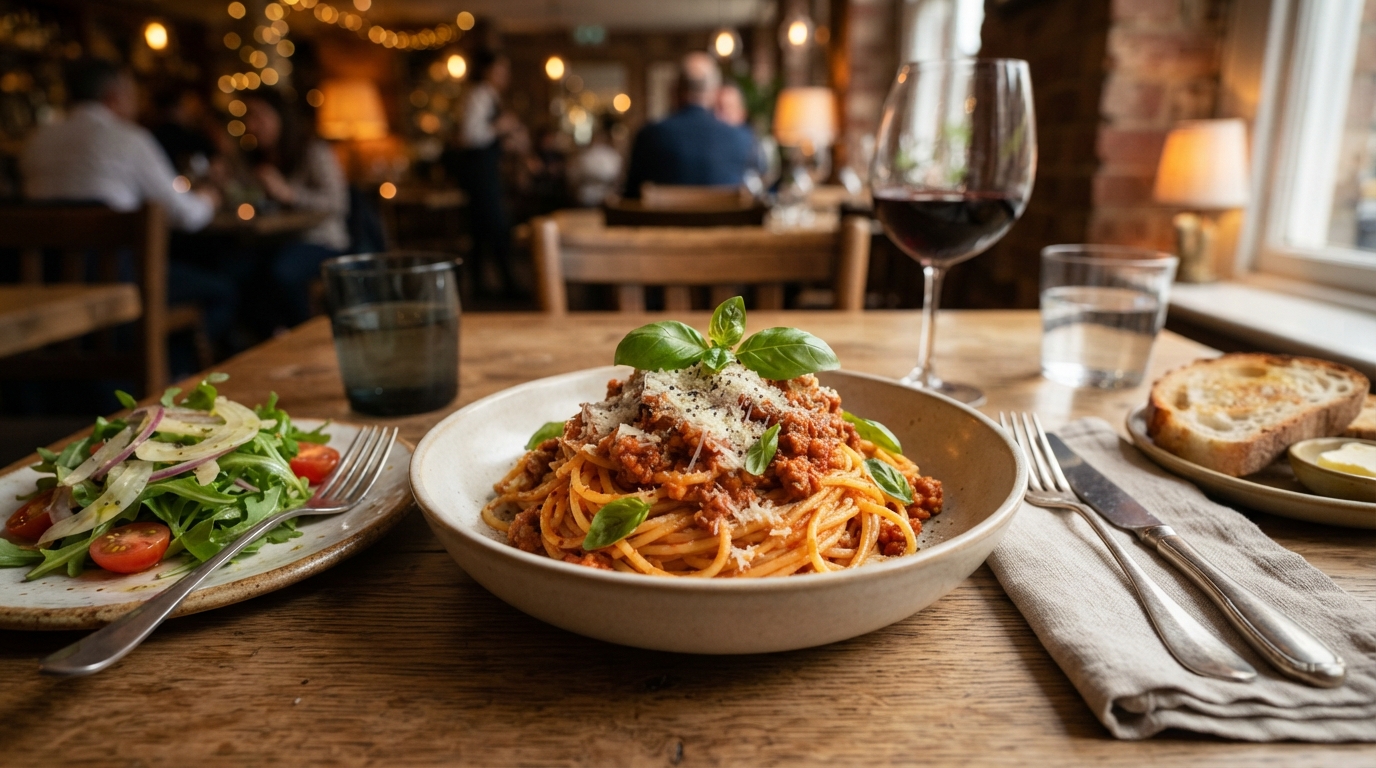
Restaurant-style pasta is less about complicated ingredients and more about technique. Properly cooked pasta, a well-balanced sauce, quality ingredients, and thoughtful finishing can turn a familiar meal into something that feels polished and satisfying.
Classic dishes such as spaghetti with meat sauce, marinara pasta, Alfredo, and baked lasagna demonstrate how familiar ingredients can produce distinctive meals when they are prepared carefully. Restaurant menus can also show how one pasta category can accommodate different flavors, proteins, sauces, and preparation styles. (Demos’ Restaurants)
The key is understanding how each component works together. Cooking pasta correctly, developing the sauce, choosing an appropriate pasta shape, and finishing the dish properly can make home-cooked pasta feel much closer to a restaurant meal.
Key Takeaways
- Restaurant-style pasta starts with properly cooked pasta and a well-developed sauce.
- Pasta water, seasoning, and cooking time can influence the final texture and consistency.
- Different pasta shapes work better with different sauces.
- Quality ingredients can improve flavor without requiring complicated recipes.
- Meat sauces, marinara, creamy sauces, and baked pasta require different preparation approaches.
- Tossing pasta with its sauce before serving helps create a more cohesive dish.
- Food-safety practices remain important when preparing pasta, meat, dairy, and other ingredients.
What Makes Pasta Taste Restaurant-Style?
A restaurant-style pasta dish usually has several elements working together rather than relying on one special ingredient.
The most important factors include:
- Proper pasta texture
- Balanced seasoning
- Well-developed sauce
- Appropriate pasta-to-sauce ratio
- Quality ingredients
- Correct cooking temperature
- Thoughtful finishing
The goal is not necessarily to recreate a particular restaurant dish exactly. Instead, restaurant-style cooking focuses on creating balance between pasta, sauce, protein, vegetables, herbs, cheese, and other components.
A well-rounded pasta meal should allow each component to contribute to the final flavor rather than allowing one ingredient to dominate everything else.
Why Properly Cooked Pasta Matters
Pasta is the foundation of the dish, so its texture can affect everything that follows.
What Does Al Dente Mean?
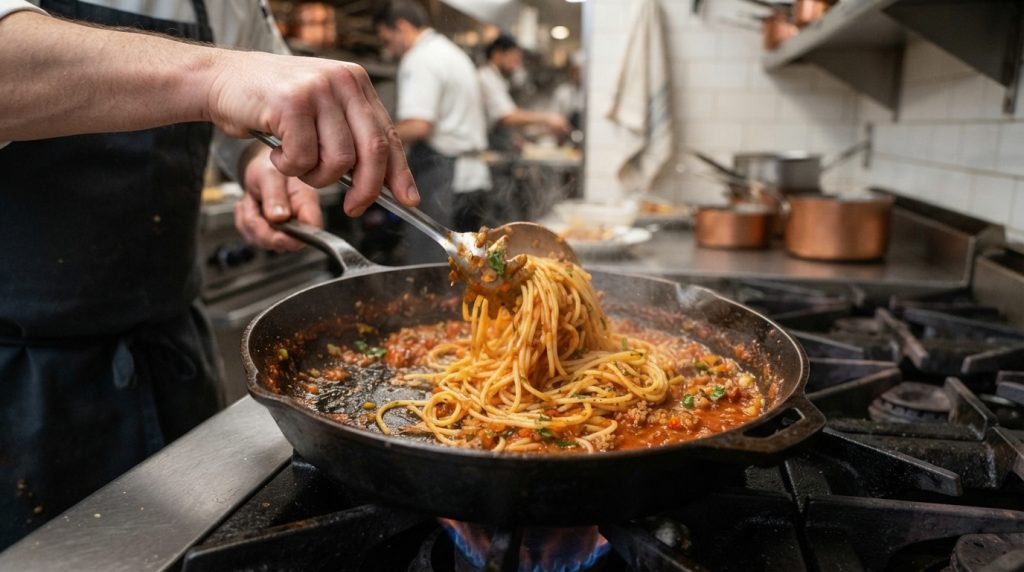
Al dente generally describes pasta that is cooked through while retaining some firmness when bitten.
This texture can be particularly useful when pasta is finished in a sauce because the noodles continue absorbing moisture and flavor after draining.
Overcooked pasta can become soft and lose its structure, while undercooked pasta may remain unpleasantly firm. Checking the texture during cooking is therefore more useful than relying entirely on a timer.
How to Cook Pasta Properly
A basic process involves:
- Bring a sufficiently large pot of water to a strong boil.
- Season the cooking water appropriately.
- Add the pasta and stir during the early stages.
- Follow the package cooking guidance while checking the texture before the suggested finishing time.
- Reserve some pasta water before draining.
- Finish the pasta with the sauce rather than simply pouring sauce over drained noodles.
The USDA food safety resources provide additional guidance for safe food preparation and handling at home.
Why Pasta Water Is Important
One of the simplest techniques for improving pasta dishes is reserving some of the cooking water.
Pasta water contains starch released during cooking. When added gradually to a sauce, it can help loosen the sauce and bring the pasta and sauce together.
How to Use Reserved Pasta Water
Rather than adding a large amount at once:
- Reserve some cooking water before draining.
- Add a small amount to the sauce.
- Toss the pasta with the sauce.
- Add more water gradually if necessary.
- Stop when the sauce reaches the desired consistency.
This technique can be especially useful when a sauce needs additional moisture without becoming excessively thin.
How to Choose the Right Pasta Shape
Different pasta shapes can work better with different types of sauces.
Long Pasta
Spaghetti, linguine, and similar shapes work naturally with sauces that can coat long strands.
Examples include:
- Marinara
- Meat sauce
- Light cream sauces
- Oil-based sauces
Short Pasta
Penne, rigatoni, and similar shapes can work well with thicker sauces because their surfaces and shapes can hold sauce.
Layered Pasta
Lasagna uses pasta sheets combined with sauce, cheese, meat, vegetables, or other fillings.
Because the dish is assembled in layers, ingredients need to be distributed evenly so that no section becomes excessively dry or overloaded.
How to Build a Better Pasta Sauce
A restaurant-style sauce usually develops flavor progressively rather than relying on seasoning added at the end.
Start With an Aromatic Base
Depending on the recipe, this may include:
- Onion
- Garlic
- Carrot
- Celery
- Olive oil
- Butter
These ingredients can provide a foundation for tomato-based, meat-based, or other sauces.
Develop the Main Flavor
The ingredients depend on the type of pasta dish.
A meat sauce may include:
- Ground beef
- Italian sausage
- Tomato
- Herbs
- Seasonings
A marinara sauce may emphasize:
- Tomatoes
- Garlic
- Olive oil
- Herbs
A creamy sauce may use:
- Butter
- Cream
- Cheese
- Garlic
- Seasonings
Allow the Sauce to Develop
Cooking a sauce for an appropriate amount of time allows its ingredients to integrate.
The exact cooking time varies by recipe, but rushing the process can leave flavors less developed.
How to Make Spaghetti With Meat Sauce
Spaghetti with meat sauce is one of the most recognizable pasta meals and provides a useful example of restaurant-style cooking at home.
A basic approach involves:
- Prepare the aromatics.
- Brown the meat thoroughly.
- Add tomato-based ingredients.
- Season the sauce.
- Allow the sauce to develop.
- Cook the spaghetti separately.
- Reserve some pasta water.
- Combine the pasta and sauce before serving.
A traditional spaghetti with meat sauce recipe illustrates how a family recipe can develop into a signature pasta dish. The recipe’s story describes meat sauce spaghetti as a long-standing family favorite that eventually became a restaurant menu staple. (Demos’ Restaurants)
Why Browning the Meat Matters
Proper browning can add deeper flavor to meat-based sauces.
Instead of immediately adding liquid after placing meat in the pan, allow sufficient contact with the cooking surface so the meat can develop color.
Avoid overcrowding the pan when possible because excess moisture can interfere with browning.
How to Make a Better Tomato-Based Pasta Sauce
Tomato-based sauces are among the most versatile options for pasta.
A basic tomato sauce can be built from:
- Tomatoes
- Garlic
- Onion
- Olive oil
- Herbs
- Salt and other seasonings
Balance Acidity and Flavor
Tomatoes can have noticeable acidity. Depending on the recipe and ingredients, balance may come from cooking time, fat, vegetables, or other components.
The objective is not simply to make the sauce sweeter. It is to create a balanced flavor profile.
Avoid Over-Seasoning
Seasoning should support the tomato flavor rather than dominate it.
Taste the sauce during preparation and adjust gradually.
How Cream-Based Pasta Gets Its Restaurant-Style Texture
Creamy pasta dishes depend heavily on texture.
A smooth sauce should coat the pasta rather than separating into a watery or oily mixture.
Common Components
Cream-based sauces may include:
- Butter
- Cream
- Parmesan or another cheese
- Garlic
- Black pepper
- Herbs
How to Improve Sauce Consistency
Tossing cooked pasta directly with the sauce can help distribute the sauce evenly.
Reserved pasta water can also be added gradually when the sauce needs thinning or additional cohesion.
Avoid adding too much liquid at once because it can dilute the flavor.
Why Ingredient Quality Matters
Restaurant-style cooking does not require every ingredient to be expensive. However, ingredient quality can influence the final result.
Consider the quality of:
- Tomatoes
- Cheese
- Olive oil
- Meat
- Fresh herbs
- Pasta
Fresh Herbs Can Add Brightness
Fresh basil, parsley, oregano, and other herbs can provide aroma and freshness.
They are particularly useful as finishing ingredients.
Cheese Can Add Depth
Hard aged cheeses can contribute saltiness, richness, and savory flavor.
Freshly grated cheese may also incorporate more smoothly into certain sauces than some pre-shredded alternatives.
How to Create Balanced Pasta Portions
A restaurant-style meal should feel balanced rather than consisting primarily of pasta.
Depending on the recipe, a plate may combine:
- Pasta
- Sauce
- Protein
- Vegetables
- Cheese
- Herbs
The appropriate proportions depend on the specific dish.
For example, a meat sauce should complement the spaghetti without completely hiding it, while a baked pasta dish may intentionally contain multiple layers of sauce, cheese, and pasta.
Why Finishing the Pasta in the Sauce Matters
One of the most useful techniques for improving pasta at home is combining the cooked pasta with the sauce before serving.
Instead of:
Cook pasta → drain → plate → pour sauce on top
Try:
Cook pasta → reserve water → drain → add pasta to sauce → toss → adjust → serve
This allows the sauce to coat the pasta more evenly.
What to Look For
The finished pasta should have:
- Even sauce coverage
- Appropriate moisture
- Balanced seasoning
- A cohesive texture
The pasta should not sit underneath a separate pool of sauce.
How to Create Restaurant-Style Baked Pasta
Baked pasta requires a slightly different approach because the dish continues cooking after assembly.
Popular baked pasta dishes include:
- Lasagna
- Baked ziti
- Baked spaghetti
- Stuffed pasta dishes
Build Layers Carefully
For layered dishes, distribute sauce and filling evenly.
A typical approach may involve:
- Sauce
- Pasta
- Filling
- Cheese
- Additional sauce
- Repeated layers
Avoid Excessive Dryness
Baked pasta can lose moisture during cooking. Adequate sauce and appropriate baking time help maintain a satisfying texture.
A traditional homemade baked lasagna recipe, for example, can combine pasta with meat, ricotta, Parmesan, Romano, mozzarella, and sauce to create a layered dish. (Demos’ Restaurants)
How to Pair Pasta With Other Foods
Pasta does not have to stand alone. Side dishes can add contrast and variety to the meal.
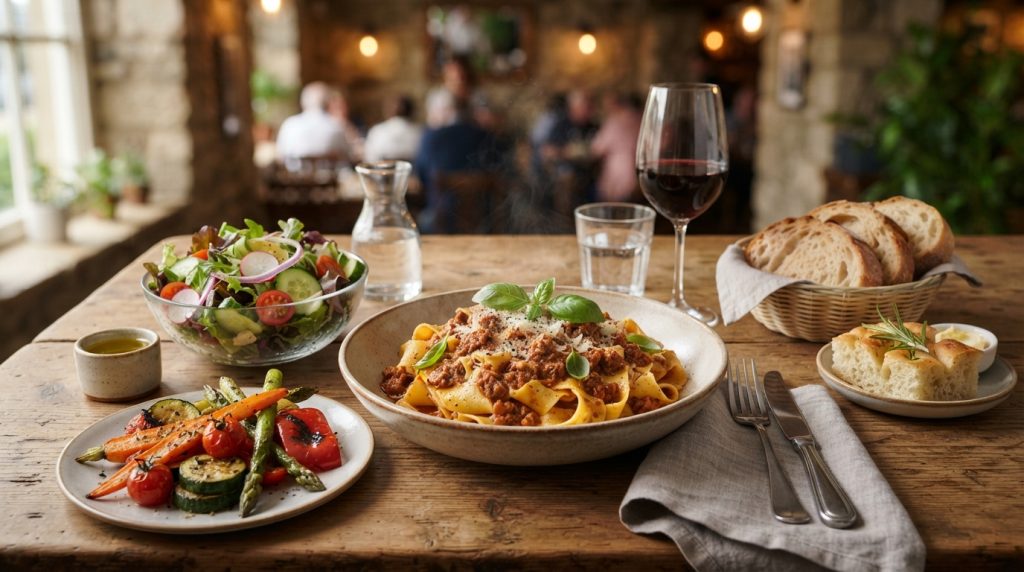
Possible accompaniments include:
- Green salads
- Roasted vegetables
- Garlic bread
- Steamed vegetables
- Soup
- Grilled proteins
The pairing should complement the pasta rather than make the overall meal unnecessarily heavy.
A restaurant dinner menu can provide useful inspiration by showing how pasta is paired with salads, soup, side dishes, and other entree categories. (Demos’ Restaurants)
Common Pasta Mistakes to Avoid
Restaurant-style results can be difficult to achieve when a few basic steps are overlooked.
Overcooking the Pasta
Soft pasta can lose the texture needed to hold sauce effectively.
Adding Too Much Sauce
Excess sauce can overwhelm the pasta and make the finished dish heavy.
Skipping Pasta Water
Discarding all the cooking water removes an easy tool for adjusting sauce consistency.
Serving Pasta Without Tossing
Pouring sauce over pasta after plating can produce uneven coverage.
Overloading the Dish
Too many ingredients can make individual flavors difficult to distinguish.
A well-prepared pasta dish often benefits from simplicity and balance.
How to Make Restaurant-Style Pasta More Convenient
Restaurant-style cooking does not have to require hours of preparation.
Meal planning can simplify the process by preparing certain components ahead of time.
Useful preparations include:
- Making sauce in advance
- Preparing vegetables
- Portioning ingredients
- Grating cheese
- Preparing proteins
- Organizing cooking equipment
Some sauces may also develop more flavor after resting, although storage and reheating should always follow appropriate food-safety practices.
For families who enjoy restaurant-style meals but want convenience, prepared meal options and takeout can provide another way to enjoy familiar pasta dishes without preparing everything from scratch.
How Restaurant Recipes Can Inspire Home Cooking
Restaurant recipes can provide more than instructions. They can demonstrate how traditional meals are developed, adapted, and presented.
Family recipes may become especially meaningful when they have a history behind them.
The meat sauce spaghetti recipe discussed earlier describes a recipe originating from a family connection to Sicily and explains how it eventually became a restaurant favorite. (Demos’ Restaurants)
Similarly, the story behind a homemade baked lasagna describes how the recipe was developed and refined before becoming a customer favorite. (Demos’ Restaurants)
These examples demonstrate that restaurant-style cooking can be rooted in familiar family traditions rather than complicated culinary techniques.
Food Safety Considerations When Preparing Pasta
Good cooking technique should always be paired with safe food handling.
This is particularly important when recipes contain:
- Ground meat
- Poultry
- Seafood
- Eggs
- Dairy
- Prepared sauces
Home cooks should follow established food-safety practices for storage, preparation, cooking, cooling, and reheating.
The USDA Food Safety and Inspection Service provides guidance on safe preparation and handling of meat and other foods.
The FDA’s Food Code also provides a model for food-safety practices used in food-service environments.
How to Use Pasta Recipes for Meal Inspiration
A useful recipe collection can help home cooks explore different techniques without starting from scratch every time.
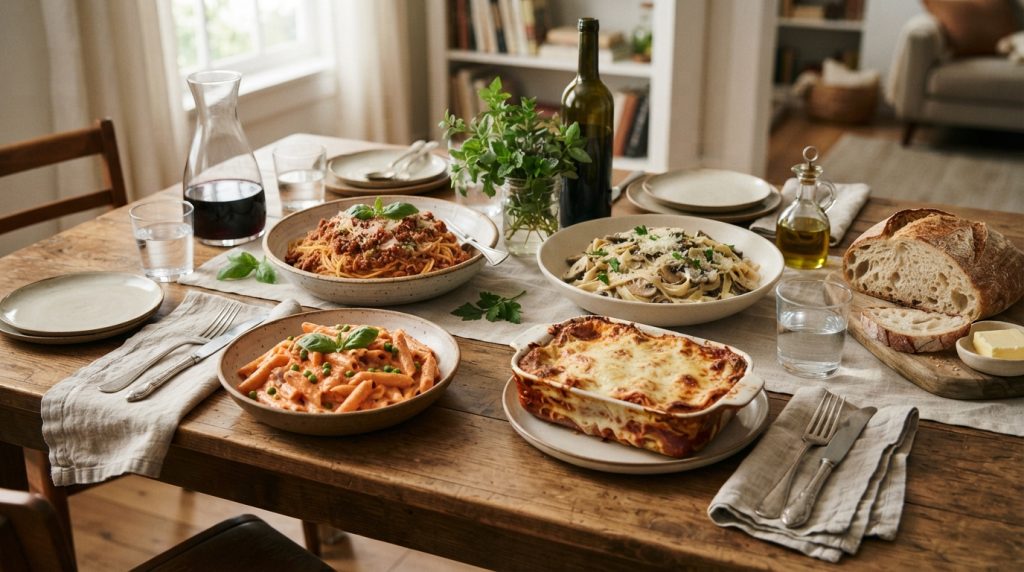
Try building meals around different combinations:
| Pasta Style | Sauce or Flavor | Possible Additions |
| Spaghetti | Meat sauce | Meatballs, herbs, cheese |
| Spaghetti | Marinara | Vegetables, meatballs |
| Fettuccine | Alfredo | Chicken, shrimp, vegetables |
| Penne | Pesto Alfredo | Chicken, mushrooms |
| Lasagna | Meat sauce | Ricotta, mozzarella, Parmesan |
| Pasta | Mushroom sauce | Herbs, vegetables |
The objective is to understand the basic relationship between pasta, sauce, protein, and finishing ingredients, then adapt those components according to personal preferences.
Frequently Asked Questions
What makes pasta taste like restaurant pasta?
Restaurant-style pasta generally depends on properly cooked noodles, balanced seasoning, a well-developed sauce, appropriate sauce-to-pasta proportions, quality ingredients, and finishing techniques. Tossing the pasta with the sauce before serving can also help create a more cohesive texture and flavor.
How do you make spaghetti taste better at home?
Start with properly cooked spaghetti and a flavorful sauce. Brown meat thoroughly for meat sauces, develop tomato-based sauces carefully, reserve some pasta water, and toss the cooked spaghetti with the sauce before serving. Fresh herbs and grated cheese can also improve the finished dish.
Should pasta be cooked directly in the sauce?
Most dried pasta is generally cooked in boiling water before being combined with its sauce. Finishing the cooked pasta in the sauce allows the noodles to absorb flavor while the sauce coats them more evenly.
What pasta shapes are best for thick sauces?
Short and tubular pasta shapes such as penne and rigatoni can work well with thicker sauces because their surfaces and shapes can hold sauce. The ideal pairing ultimately depends on the specific recipe and texture desired.
How can pasta sauce be made less watery?
Allowing the sauce to reduce can concentrate its flavor and thicken it. Reserved pasta water should be added gradually rather than all at once. If pasta is being finished directly in the sauce, its starch can also contribute to the final consistency.
Conclusion
Making restaurant-style pasta at home does not require complicated techniques or an extensive list of ingredients. The most important principles are straightforward: cook the pasta carefully, develop the sauce, choose ingredients that work together, maintain balance, and finish the dish properly.
Traditional dishes such as meat sauce spaghetti and baked lasagna show how familiar recipes can become memorable meals through careful preparation and consistency. (Demos’ Restaurants)
The same principles can be applied across many pasta styles. Once the fundamentals are understood, home cooks can experiment with different sauces, proteins, vegetables, cheeses, and pasta shapes while maintaining the balance that makes a satisfying pasta meal work.